Too Different to Belong, Too Ordinary to Stand Out
How online culture squeezes out experimentation, and how to reclaim the messy middle.
TLDR: The online world amplifies a deep human paradox: we want to fit in and stand out at the same time. Algorithms reward polish, not practice. Visibility, not depth. The antidote is in reclaiming the messy middle where originality is formed, and letting technology be collaborators, not replacements.
I keep circling a question that psychology hasn’t yet neatly answered: why does the online world make us feel both too different to belong and too ordinary to matter?
Every one of use wants to feel part of something and to connect with others who share our passions. But at the same time, we also want to stand out — to be noticed, to feel valued, and be seen as original in a sea of sameness.
It’s a quiet paradox that shapes how we show up online, even when we don’t realise it. We learn the tone, the language, the style of what works. We teach it in courses, package it as personal branding, and call it thought leadership. But what we’re really teaching is conformity with better lighting. We mirror the voices that get attention and copy the aesthetics that get engagement. And before long, our own edges start to blur.
Fit in, or Be Phenomenal
I see it in my eighteen-year-old who wants to be a musician. Finding your voice at that age is hard enough when you’re still working out who you are, what makes you you. The online world adds another layer of noise that tells you how different you are to the norm. Then it reminds you that there are thousands of people who are better looking, more successful, or more talented than you. It’s crushing.
If I’m honest, I feel it too. I’ll see someone speaking about a topic close to my heart — the intersection of humanity, business models and technology — and a small voice whispers, It’s already been said. The world doesn’t need my version. I don’t want to copy. I also don’t want to add more noise to the content rat race. Suddenly I’m stuck — afraid to imitate, but unsure I can originate.
That’s the paradox of the online world: it convinces us that we are both too different to belong and too ordinary to matter.
Comparison isn’t new, of course. It’s one of the oldest human instincts we have. Long before the online world, we looked to our neighbours, and our peers to work out if we were keeping up. It helped us calibrate our place in the group. We compared to learn, to belong, and often to push ourselves that bit further.
Psychologist Leon Festinger named this social comparison theory back in the 1950s: the idea that we understand ourselves by measuring up against others. It worked well for us when we had a few dozen peers in our village or school, but now we can see thousands of people excelling at the very thing we love and doing it, apparently, effortlessly.
What once fuelled our motivation now leaves us feeling depleted. Instead of stretching us, comparison starts to shrink us. And the problem isn’t comparison itself — it’s the infinite scale of the peer group, while our capacity to process it hasn’t changed at all.
Stone Age wiring in a digital amphitheatre. Overwhelmed and unfulfilled.
Not Normal enough to Belong
There’s a reason we care so much about fitting in - our brains are wired for belonging, quite literally, for survival.
In early human societies, standing out too much could be dangerous, but being left out was even worse. Evolution rewarded cooperation, mimicry, and social harmony. We learned to read the group, to blend in just enough to stay safe.
That ancient wiring still drives us today.
Influencers are today’s tribal leaders: signalling how to speak, dress, think, and perform — it’s an ancient practice. We have always looked to the alphas for cues.
Even professional and creative spaces are becoming more choreographed. On LinkedIn, people want to sound original, but not too controversial, confident, but never arrogant. Even authenticity has a template now: the humblebrag wrapped in gratitude, the leadership lesson, the smiling photo from yet another panel or summit that quietly says: I was there. I belong. The herd has become more polished but the mechanics remain the same.
On Medium, writers try to balance how to be relatable and thought-provoking in the right proportions. Titles are engineered for virality. We all want to have an original point of view, but also to be topical enough to trend. To be niche enough to feel unique, but broad enough to appeal to the masses. It’s an impossible balance: originality shaped by what we think the algorithm, or the reader, will find interesting enough to pay attention to.
And so we start writing toward approval rather than from authenticity — not because we’re shallow, but because we’re human. Belonging still feels like safety. However, in the online world, safety often means sameness.
Too Normal to Matter
Here’s where the irony really bites.
The same instinct that makes us conform — that hunger for belonging — also leaves us desperate to stand out. We don’t just want to be accepted by the herd, we want to be noticed and valued by it.
Visibility has become a new kind of social currency. But visibility isn’t evenly distributed. Algorithms reward the loudest, most polished, most clickable versions of success — the top 0.1% of every field.
So while our ancient wiring tells us to stay close to the group, our digital environment tells us the only way to matter is to rise above it. It’s like being trapped between two contradictory commandments: Blend in. But also, be extraordinary.
The result is a kind of identity whiplash.
You can’t win either way. If you play it safe, you disappear into the noise. But if you try too hard to stand out, you risk rejection (cancel culture), ridicule, or simply the echoing silence of an algorithm that decides you’re not engaging enough.
It’s especially brutal for creative minds. What should be inspiring instead feels paralysing. Why start if perfection is already everywhere?
I feel it too, as a writer. Every time I see someone articulate an idea beautifully online, I feel a mix of admiration and disillusionment. It’s not jealousy, it’s futility… the quiet sense that everything original has already been done.
That’s the maddening trick the online world plays on us: it gives us infinite inspiration, then quietly robs us of the permission to try.
From a neuroscience point of view, it’s the result of a very typical chemical reaction. When we see excellence, our brain releases dopamine, a jolt of admiration and possibility. But if the goal feels unreachable, that same circuitry backfires on us. The reward system shuts down, and admiration turns to apathy. We’ll never reach that level, so why bother trying.
Neuroscientists call this reward prediction error — the tiny gap between what we hope for and what we get. When life exceeds our expectations, dopamine gives us a rush of joy and momentum. When it falls short — when the post gets low engagement, the song goes unheard, the effort feels unseen — dopamine dips instead. And when that disappointment repeats often enough, the brain starts to conserve energy; motivation fades, and apathy quietly takes its place.
Online, every scroll promises a hit of inspiration, every let-down leaves the reward system a little more depleted. We scroll through a thousand better versions of ourselves and wonder why we feel empty. The very abundance that should inspire us instead convinces us we have nothing left to give.
The Disappearing Middle
What’s vanishing in all this noise isn’t just confidence, it’s practice. The messy, unglamorous middle where skill, style, and self take shape.
Every craft has that awkward in-between stage when you’re not yet good, but you’re learning fast — when your brain is still wiring new connections through repetition, mistakes, and ‘almost-there’ moments. Through repetition and small failures, the brain strengthens new pathways (myelination) — the slow making of tacit knowledge you can’t Google.
But platforms reward polish, not process. Works-in-progress don’t trend. So we hide the very effort that creates expertise. The unseen effort that used to form the foundation of expertise is quietly eroding, replaced by performance and presentation.
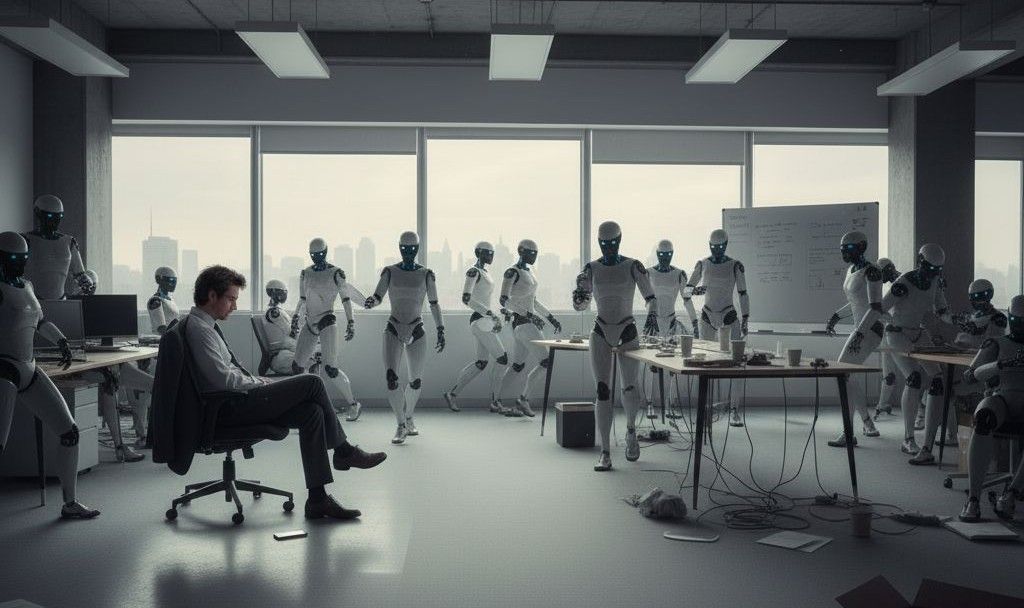
Enter AI and the temptation to skip struggle altogether. Why wrestle with uncertainty when a tool can generate a perfect first draft, a trending melody, a ready-made image? The temptation to skip the messy parts is enormous. Yet those are the very moments that teach the brain how to connect ideas, to improvise, to think creatively in the first place.
If the online world has made us afraid to look clumsy, AI might make it optional to ever be clumsy again. We could end up producing more, and know less.
We become consumers of finished thought rather than makers of new ones.
You can see it everywhere once you start looking. Take vibe coding, for example: an accessible way to prototype apps and websites. There are two loud churches online and both punish experimentation. One says, get on the train or get left behind. The other screams, make it incredible or don’t make it at all: ship something no one has ever seen, flawless on the first try, the first one-person billion-dollar startup.
Between the urgency to join the herd and the pressure to be singular, the middle — the clumsy first steps and experiments- are deemed irrelevant. And that’s the real loss.
Because it’s in those rough passes that tacit knowledge forms. It’s where myelination happens, where fingers learn patterns the mind can’t yet name, where style begins to take shape. When vibe coding is judged either as herd work or as not-yet-genius, we discourage trying. We forfeit the very repetitions that make originality possible.
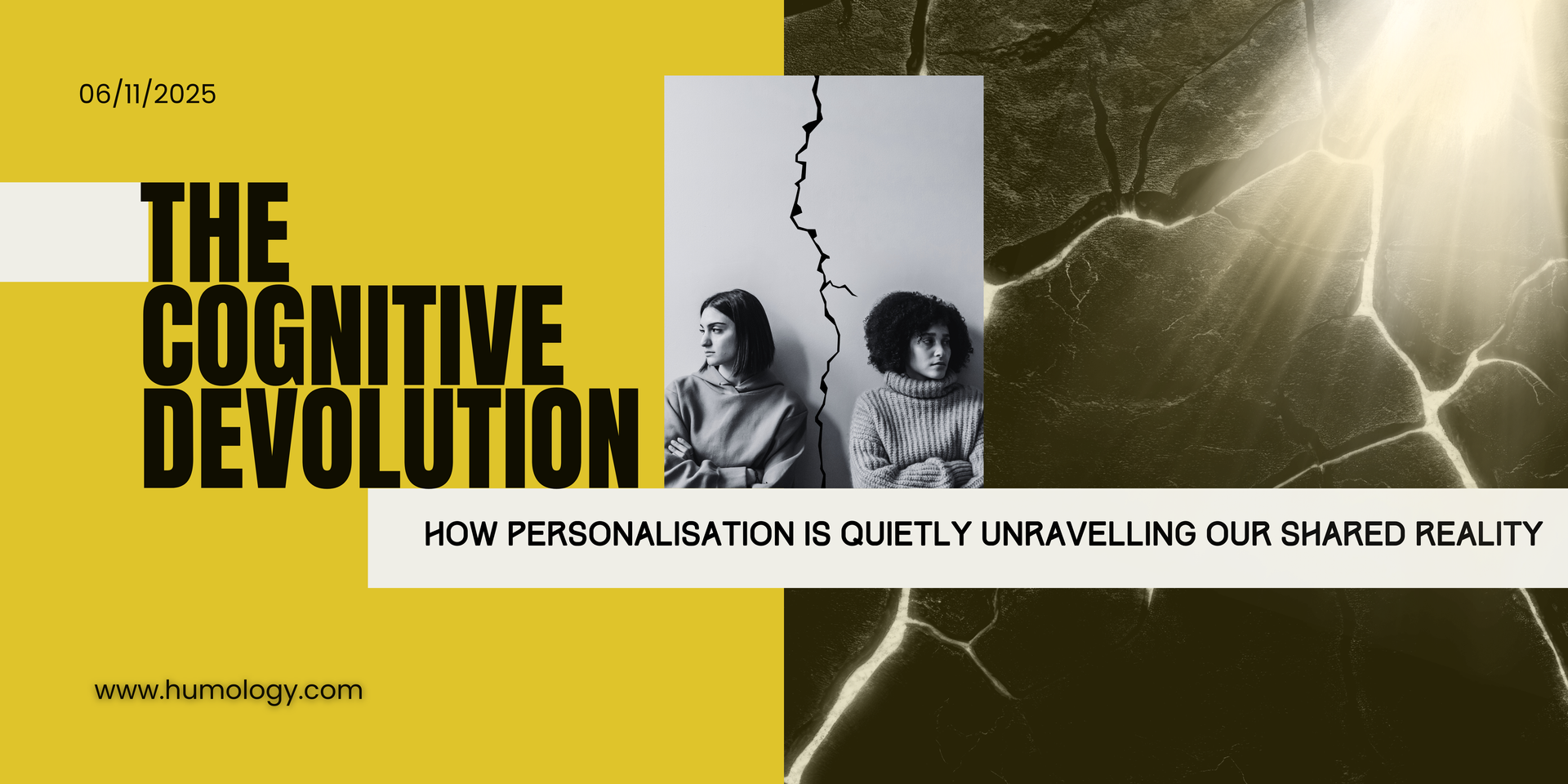
The problem isn’t who’s right. It’s that both sides are shouting so loudly that no one in the middle can hear themselves think. That’s the pattern of our time — not just online, but politically, culturally, socially. Everything splits into camps. You’re either brilliant or ridiculous, authentic or fake, genius or fraud. And when creativity becomes a battleground, experimentation dies first.
It’s easier to pick a side than to risk being misunderstood in the middle. But the middle — the place of curiosity, trial, and play — is exactly where progress happens.
Polarisation used to be a political diagnosis, now it’s a creative one. We’ve lost patience for the in-between, for the ‘I don’t know yet. But that’s where every new idea begins.
Reclaiming the middle
Maybe what we’ve lost isn’t just originality, but tolerance for the in-between. We’ve built an online world that celebrates extremes: viral brilliance, instant success, effortless polish, and quietly dismisses the ordinary, the unfinished, the ‘good enough’.
But life, and learning, mostly happens in the middle.
In the slow accumulation of tacit knowledge.
In the awkward rehearsal, the abandoned draft, the 27th version that no one ever sees. That’s where neurons forge new connections, where curiosity finds its footing, where true creativity begins to take shape.
The middle is messy, but it’s also magnetic, It’s where authenticity lives.
So maybe the answer isn’t to withdraw from the online world or to worship it, but to re-enter it differently. To see comparison as a mirror, not a verdict. Let it show you what you value and what you’re drawn to.
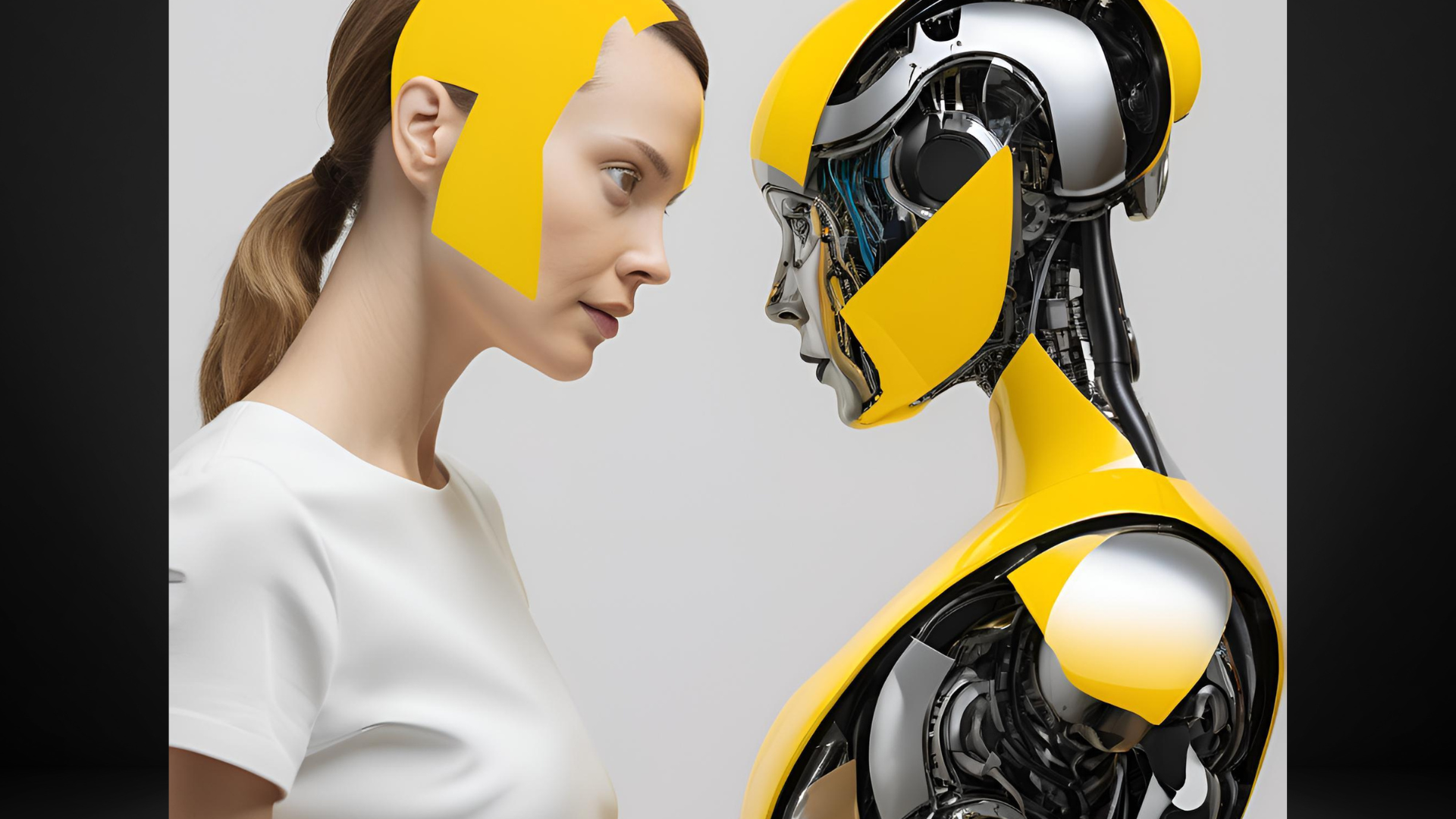
We can let ourselves be influenced without losing our individuality. We can use AI as a collaborator, not a crutch. We can learn from the crowd without dissolving into it.
We don’t need to pick a side: to belong or to stand out, be human or be machine, analogue or digital. We can be the piggy in the middle: curious, grounded, imperfect, and gloriously human.
Because the middle is where life actually happens.
And maybe, just maybe, it’s where we’ll find ourselves again.