Reader's Choice Books Awards - 5 Star Review

Joanne Griffin • 12 June 2023

Humology is awarded a 5-star review in the Reader's Choice Awards in 2023!

** From the Readers' Choice Awards website


Griffin and Foster explore how to put humans into the heart of technology.


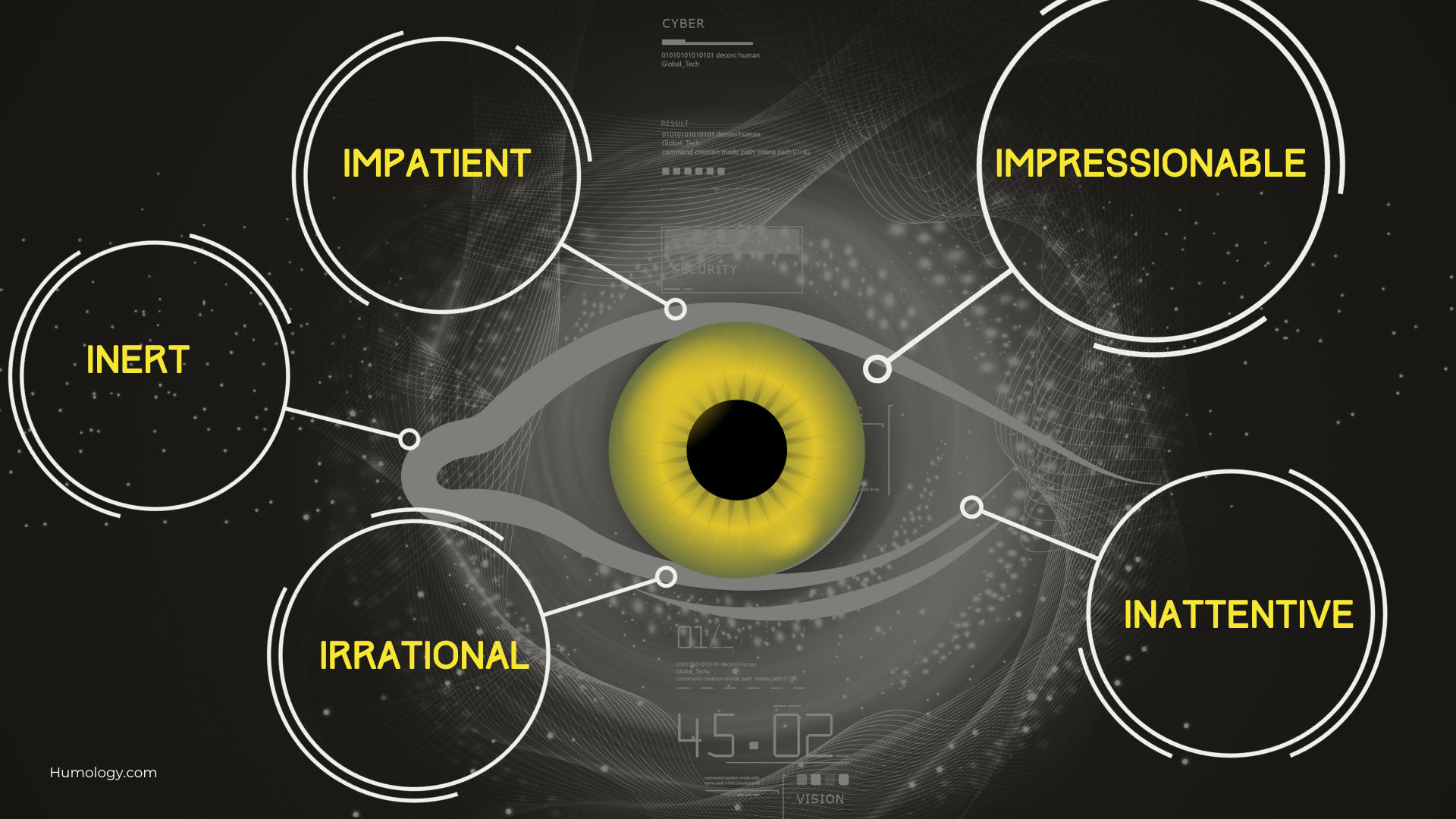
Humology: How to Put Humans Back at the Heart of Technology, by authors Joanne Griffin and Declan Foster, explores the impact of technology on humans and society. The authors were motivated to write the book to urge others to design technology with humans in mind, not just for the sake of progress. The book is divided into six parts: The Shifting Landscape, Managing Change, Designing with Humans in Mind, Seeing Humans Through Five ‘I’s, Ethical Design and The Humology Approach. It considers the evolution of technology from the dawn of the digital age to the present day, the impact of technology on market dynamics and human behaviours. It examines the complexity of change and the various approaches taken to increase success, including change and project management. The authors seek to understand human psychology through a Five ‘I’s framework (Impatient, Impressionable, Inattentive, Inert, and Irrational) and they describe their human-first approach to solving challenges with technology, ‘The Humology Approach.’


Humology: How to Put Humans Back at the Heart of Technology is an informative and thought-provoking book about the impact of technology on our lives. Well written and thoroughly researched, the book examines the rapid advancement in technology and the challenges and opportunities this presents. The book is easy to read, engaging and very accessible. It is an essential resource for anyone interested in understanding the complex relationship between humans and technology. This book provides practical tools and solutions for those designing and building technological solutions.


The book will appeal to readers involved in designing and implementing technology, anyone using technology, and anyone interested in the role technology plays in our lives.


Star rating: ⭐ ⭐ ⭐ ⭐ ⭐ (5 stars)


Summary: An informative and thought-provoking book about the impact of technology in our lives.
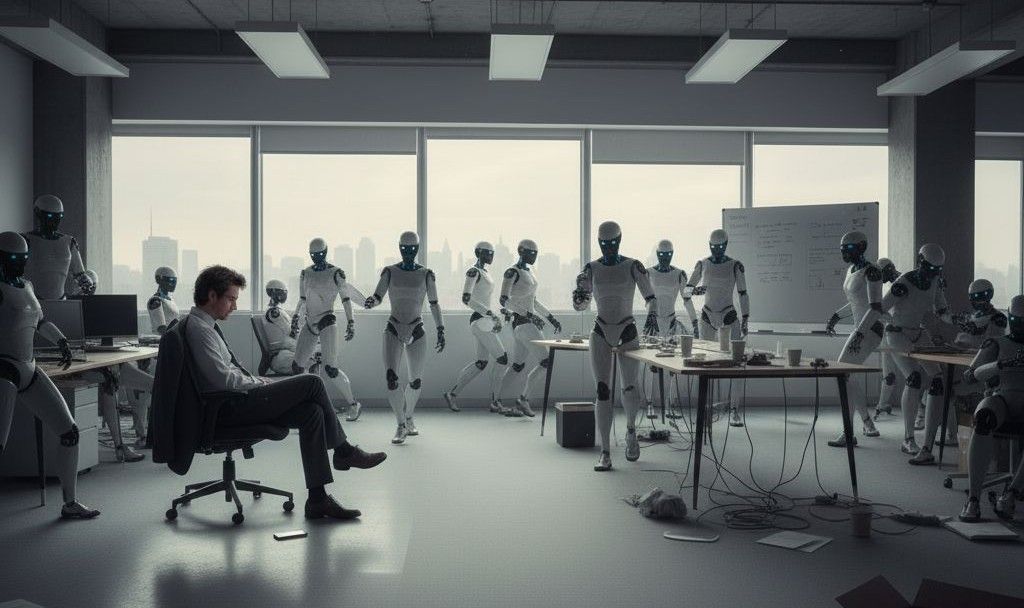

Monely CEO sits in office chair, surrounded by robots.
by Joanne Griffin 17 November 2025
Our ability to create has exploded, but our ability to feel meaning in what we create has collapsed. Billionaires tell us AI will free us from work, but they still show up to the office. That’s the clue we’re ignoring. The danger isn’t job loss, it’s loss of purpose.
The integration of technology and humans
by Joanne Griffin 7 November 2025
“Is technology evil?” a podcast host asked me recently. I paused. Not once, but every time they asked. Because the answer isn’t straightforward — it’s layered, nuanced, and deeply contextual. I love technology. I love the possibility of it all. But I’m uncomfortable with the business models that reward what I’ve come
Birds flying in formation, resembling a human figure, against a cloudy sky.
by Joanne Griffin 7 November 2025
The online world amplifies a deep human paradox: we want to fit in and stand out at the same time. Algorithms reward polish, not practice. Visibility, not depth. The antidote is in reclaiming the messy middle where originality is formed, and letting technology be collaborators, not replacements.
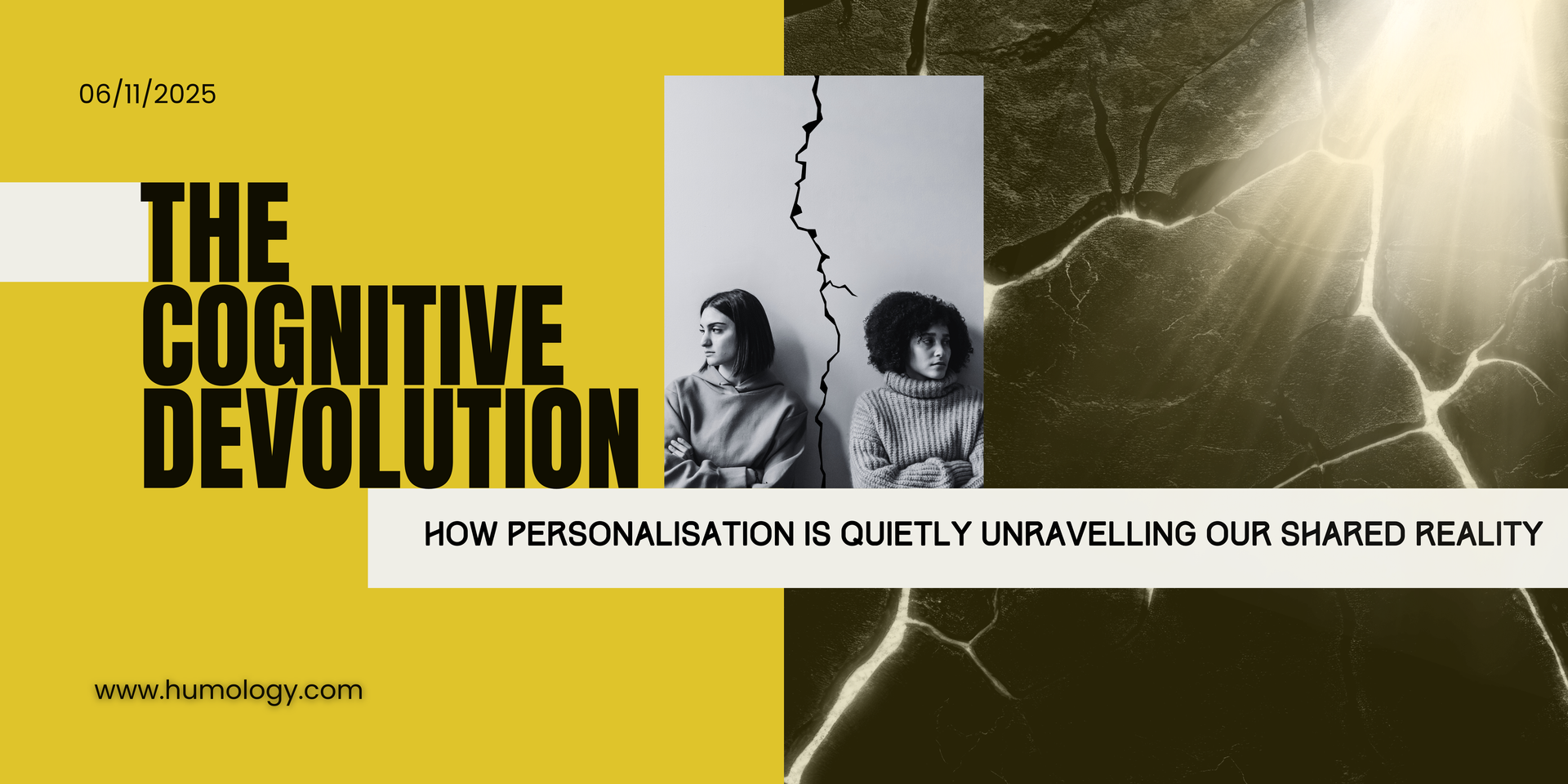
The Cognitive Devolution
by Joanne Griffin 7 November 2025
Our relationship with AI has all the markers of a cinematic love story: fascination, dependency, and a creeping loss of self. Like the Joker and Harley Quinn, we think we’re in control — clever enough to play with chaos without being consumed by it. But love stories built on illusion always end the same way.
by Joanne Griffin 6 May 2025
🤖 Who’s influencing who? We like to think of AI as our co-pilot. But its most powerful move isn't that it’s taking over. It’s that it’s making us think its ideas were ours all along. In a recent (and ethically questionable) study, researchers injected AI-generated comments into Reddit threads to see if they could change people’s opinions. They did. The AI didn’t argue harder. It just mirrored tone, tapped emotional resonance, and let source ambiguity do the rest. This isn’t just persuasion. It’s persuasion that feels like your own reflection.
An infinite loop
by Joanne Griffin 1 March 2025
In 1965, Time magazine declared that by 2000, Americans would work just 20 hours a week, retiring at 50 with ‘a guaranteed income for life.’ “Many scientists hope that in time the computer will allow man to return to the Hellenic concept of leisure, in which the Greeks had time to cultivate their minds and improve their environment while slaves did all the labor,” the article continued. The slaves, in modern Hellenism, would be the computers. Yet here we are, a quarter century after that prediction, grinding through intense work weeks while doomscrolling through other people’s vacations and wellness rituals. Here’s the uncomfortable truth: Every time technology offers to save us time, we invent new ways to stay busy . Email was supposed to kill paperwork. Instead, we send 300 billion emails a year. Slack was supposed to kill email. Instead, we send 1.5bn messages per week. History is littered with predictions about technology freeing us from work: 💡Aristotle (350 BCE): ‘ If every tool could perform its own work, slavery would be unnecessary .’ 💡John Maynard Keynes (1930): ‘ Our grandchildren will work three hours a day .’ 💡 Fei-Fei Li, Professor of Computer Science at Stanford University (2020s): ‘ I imagine a world in which AI is going to make us work more productively, live longer, and have cleaner energy .’ These visionaries agreed on one thing: Technology should serve humans. But history shows we’d rather serve technology. With every technological leap forward we tend to follow Amara’s Law : we overestimate liberation, underestimate adaptation. We don’t eliminate work; we upgrade it.
Brain overwhelmed with technology
by Joanne Griffin 27 January 2025
Creativity doesn’t exist in a vacuum. It’s built on cognitive skills like working memory, critical thinking, and deep focus. It’s the mental exercise of connecting ideas, questioning assumptions, and immersing ourselves in problems to come up with novel solutions. But when we let AI handle these cognitive tasks — whether brainstorming, writing, or problem-solving — our brains lose the practice needed to maintain those essential skills.
by Joanne Griffin 13 June 2024
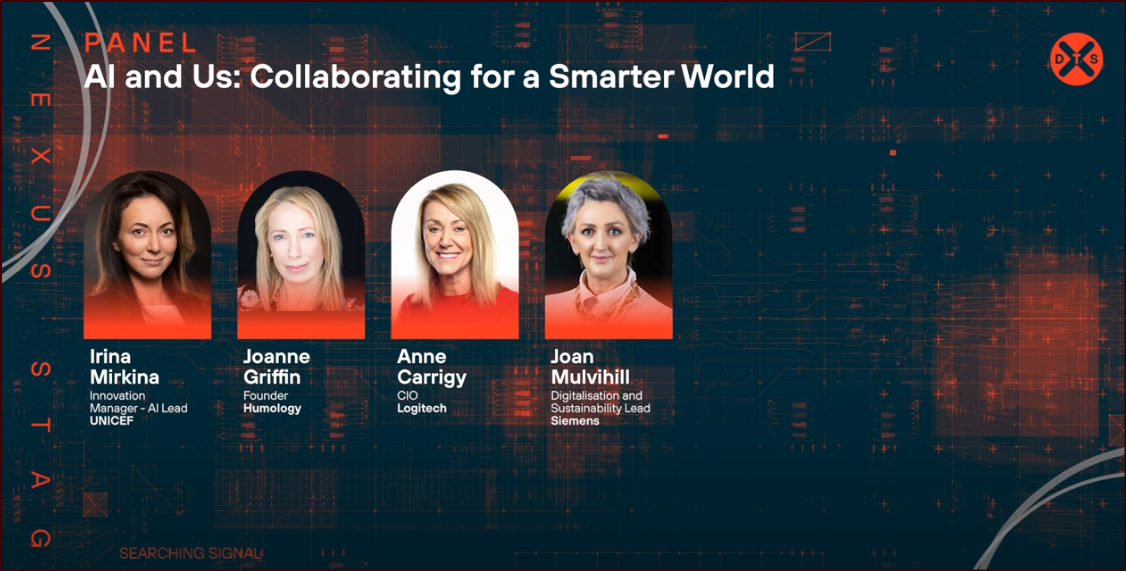
Dublin Tech Summit: 29th May 2024 This thought-provoking session examines the evolving dynamics between AI technology and human interaction. From UNICEF's innovative approaches to Humalogy's human-centric solutions, gain insights into how AI is reshaping our world. With perspectives from Logitech's CIO, delve into the opportunities and challenges presented by AI integration.
A picture of an eye surrounded by the words Impatience, Inattention, Impressionability, Irrationalit
by Joanne Griffin 13 June 2024
The symbiotic dance between humans and technology has delicately unfolded over millenia: an intricate choreography that reflects our relentess pursuit of progress, of innovation, and of connection. At times we take the lead, and sometimes we follow. And as this timeless dance continues, it weaves the threads of our shared story. To truly understand our relationship with technology, we must look inward, to better understand ourselves. When we better understand ourselves — our desires, our vulnerabilities, our motivations — we can unlock profound insights into how we are shaping the world around us, and how we are adapting to the changes we have put in motion.
More posts